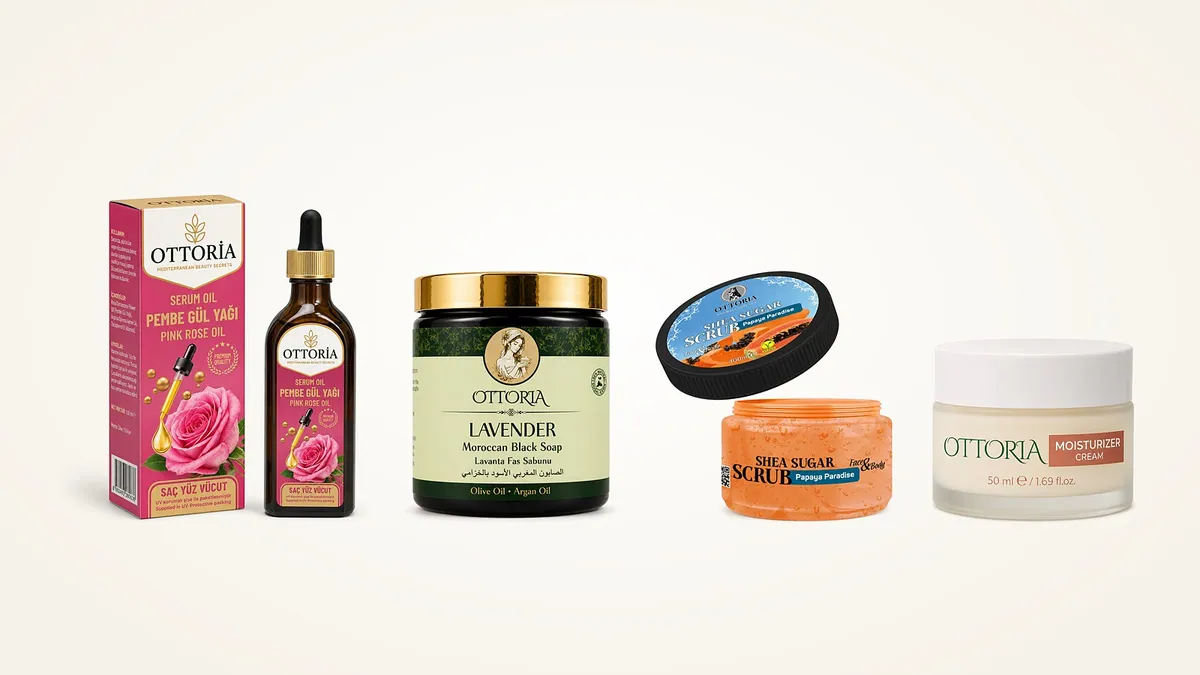
Short answer: Private label cosmetics are products developed and manufactured by one company and sold under another company's brand. The manufacturer handles formulation, production and filling, while the brand owner manages brand identity, marketing and sales. It is one of the fastest ways to build a cosmetic brand without your own factory.
What is the difference between private label and contract manufacturing?
In Turkey the two terms are often used interchangeably. In practice you can distinguish them like this:
- Private label: The manufacturer's ready-made or custom-developed formulas are produced under your brand. You own the brand and packaging.
- Contract ("fason") manufacturing: A formula you own is produced on your behalf in the manufacturer's facility.
In both models, the responsible person role, which carries responsibility for placing the product on the market, must be clearly defined in the contract.
Seven steps to launch your own cosmetic brand
1. Define your audience and positioning
Who will buy your product, why and at what price? A minimalist line for sensitive skin, or products with active ingredients for an audience seeking intensive care? Positioning drives every decision on formula, packaging and price.
2. Keep the range focused
A focused launch line of a few products reduces stock and marketing load. Complementary products such as a hand cream, a face serum and a moisturiser make a good starting combination.
3. Choose a ready-made or custom formula
Ready-made formulas get you to market quickly with a lower initial cost. Custom formulas create differentiation but take longer to develop and assess.
4. Test your samples
Try texture, scent, colour and skin feel with people from your target audience. Revisions at the sample stage prevent costly changes during production.
5. Design packaging and labels
Packaging must suit the formula: airless or opaque packaging is preferred for light- and air-sensitive formulas. Labels must include information such as the name and address of the responsible person, nominal content, date of minimum durability or period after opening (PAO), warnings, batch number and ingredient list.
6. Complete the regulatory steps
In Turkey, cosmetic products are governed by the Cosmetic Products Regulation published in Official Gazette No. 32184 on 8 May 2023. Before the product is placed on the market:
- a product information file is prepared,
- a safety assessment is carried out and a safety report is issued,
- the product is notified to the Product Tracking System (ÜTS) of the Turkish Medicines and Medical Devices Agency (TİTCK).
7. Plan and scale production
Treat your first run as a market test. As sales data comes in, increase quantities with the same formula and quality criteria.
Advantages and watch-outs of the private label model
| Advantages | Watch-outs |
|---|---|
| No investment in a facility or equipment | Formula rights must be defined in the contract |
| Faster time to market | Ready-made formulas may offer limited differentiation |
| Access to R&D and production experience | Minimum order quantities need planning |
| Quantities scale with demand | Responsible person obligations must be clearly assigned |
Five questions to ask a manufacturer
- Is production carried out under good manufacturing practice (GMP)? The international guideline for cosmetics is ISO 22716.
- Do they support the product information file and ÜTS notification?
- How do samples and revisions work?
- What are the minimum order quantities and lead times?
- How are formula and brand rights defined in the contract?
Conclusion
Combined with clear positioning, a careful sampling process and complete regulatory documentation, private label cosmetic manufacturing offers a fast and controlled start for a new cosmetic brand. At Ottoria Kozmetik we support you at every step, from the brief to batch production.